Okybaby Electric Jeeps, Bumper Cars & Ride-Ons

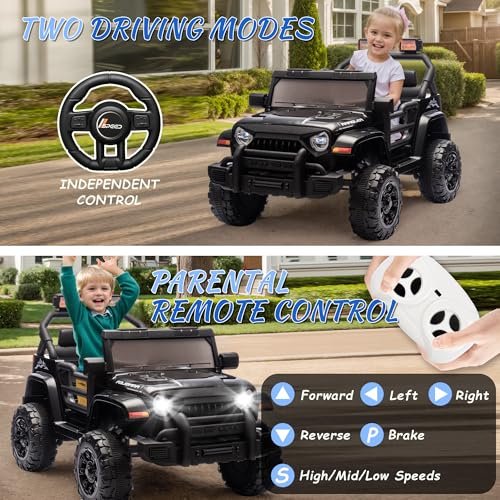
Okybaby builds electric ride-ons, bumper cars, ATVs, tractors, and jeeps from the ground up with one rule: every vehicle ships with a 2.4G parental remote override, slow-start ignition, and certified safety construction — standard, not optional. The lineup spans 11 vehicles, from a 1.55 MPH toddler bumper car that spins 360° on hard floors to a 400W dual-motor two-seater ATV with four-wheel independent suspension built for grass, gravel, and everything in between. Whether your child is 18 months into their first ride or old enough to share a seat with a sibling, there's a specific Okybaby model matched to their age, weight, and the terrain in your yard.
✓ ASTM/CPSIA/CPSC Certified✓ Parental Remote on Every Model✓ 12V to 400W Lineup
See on Amazon
OKYBABY Ride on Truck Car
Certified Safety, Not Just a Label

Every Okybaby vehicle has passed ASTM F963, CPSIA, and CPSC testing — three separate US standards covering mechanical hazards, lead and phthalate limits, and federal enforcement — built from non-toxic PP materials throughout.

2.4G Parental Remote on All 11 Models

Every Okybaby vehicle — from the $89.99 hamburger bumper car to the 400W two-seater ATV — includes a parental remote that takes priority over child inputs the moment you engage it.

Slow-Start Ignition Across Every Vehicle

On a 24V 400W ride-on, a sudden start can push a toddler backward in the seat; Okybaby's slow-start function ramps the motor up gradually on every model in the lineup, not just the higher-voltage ones.

Voltage Matched to Your Yard's Terrain

Okybaby's 12V models handle flat pavement and smooth concrete at 1.55–3.11 MPH; the 24V 400W models push through grass, gravel, and gentle slopes at up to 4.97 MPH — bumper cars are hard-floor only.

Okybaby Ride-On Cars and Bumper Cars

The Okybaby lineup breaks into three distinct categories: bumper cars built for hard indoor floors with 360° spin mechanics, 12V ride-ons suited to pavement and smooth surfaces for younger toddlers, and 24V ride-ons with significantly more torque for real backyard terrain. Start with what your child will actually drive on — that determines the right tier faster than age alone.

OKYBABY 12V Bumper Car for Kids

12V Classic Bumper Car

The round bumper car runs dual 35W motors — higher output than the 12V jeep — at a fixed 1.55 MPH on omni-directional wheels that enable true 360° rotation. The five-point safety belt and anti-collision padding around the perimeter set it apart from every other bumper car in the lineup. Requires a hard, flat surface: tile, hardwood, or smooth concrete.

The only Okybaby vehicle with a five-point safety belt — the right call for toddlers ages 1.5–5 who need maximum restraint during spins and bumps on a hard floor.

See on Amazon
Okybaby 12V Bumper Car for Kids

12V Hamburger Bumper Car

The hamburger-shaped bumper car weighs 13.45 lbs — lightest in the lineup — and sits just 12.99 inches tall, giving it a low center of gravity and anti-roll stability the round model doesn't have. Speed is adjustable from 1.68 to 3.11 MPH, unlike the round bumper car's fixed 1.55 MPH. The shape is the conversation-starter; the adjustable speed is the practical advantage.

Best for gift buyers who want something visually distinctive — but note it uses a two-point belt rather than the five-point belt on the round model, so it's better suited to ages 2–5 than younger toddlers.

See on Amazon
Okybaby Dinosaur Ride On Car for Kids

12V Dinosaur Mini ATV

At 28.74 inches long and a fixed 1.86 MPH, this is the smallest and slowest ride-on in the Okybaby lineup — deliberately. The dinosaur theme with included sticker customization and a Bluetooth speaker makes it a first-ride vehicle for cautious toddlers ages 2–4 who'd be overwhelmed by faster models. The compact frame fits through standard interior doorways.

The fixed 1.86 MPH speed isn't a limitation — it's the point. This is the right starting vehicle for very young or cautious riders who need low speed and a manageable frame size before stepping up.

See on Amazon
Okybaby Dinosaur Ride On ATV for Kids

12V Dinosaur ATV with Mic

Nearly identical dimensions to the standard dinosaur ATV at 28.74×14.57×15.35 inches, but this variant adds a microphone interface jack and lists a stated battery average life of 1.5 hours — 30 minutes longer than the non-mic version's documented 1-hour runtime. Bluetooth streams audio through the speaker while the mic jack enables karaoke-style use. Same 1.86 MPH fixed speed, same 66 lb capacity.

Choose this over the standard dinosaur ATV if your child wants to sing along during the ride — the microphone jack and longer stated runtime (1.5 hours vs. 1 hour) are the only meaningful differences between the two models.

See on Amazon
Okybaby 12V Ride On Electric Car 3-Wheel Ride on Toys for Toddlers w/Parent Remote

12V 3-Wheel Scooter

The only three-wheel vehicle in the Okybaby lineup, and the only one with a wooden handle — a material choice that makes it feel meaningfully different from the all-plastic alternatives. At 14.99 lbs and 29.53 inches long, it's compact and easy to maneuver. The ergonomic wide seat, anti-slip wheels, and power display (battery level indicator) round out a feature set built around comfort and practicality rather than speed or power.

Best for toddlers who find full car and truck ride-ons too large or visually intimidating — the scooter format and wooden handle give it a more traditional toy feel that tends to appeal to younger or more cautious first riders.

See on Amazon
OKYBABY Ride on Truck Car

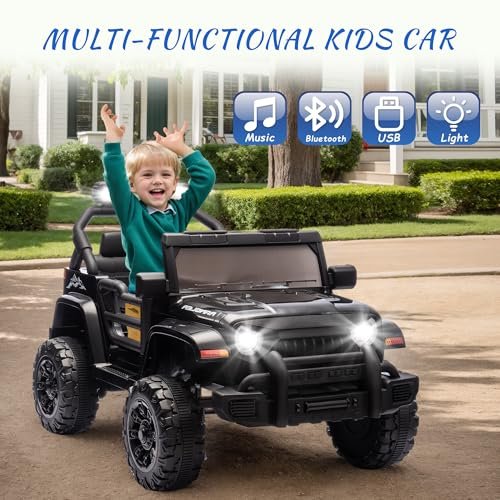
12V Jeep Truck Ride-On

With 398 reviews and a 4.5-star rating, this is Okybaby's highest-volume product — the default first purchase for parents shopping the brand. Dual 25W motors and a 12V 4.5AH battery deliver 1.86–3.11 MPH across three speed levels. The two doors that open are a detail that matters to kids; the four-wheel suspension and ASTM/CPSIA/CPSC certification are the details that matter to parents. Available in seven color variations.

The 398-review count makes this the most field-tested vehicle in the lineup — ideal for pavement and smooth surfaces for ages 1–4, with a real-world charge delivering 1–2 hours of runtime per 8–12 hour charge cycle.

See on Amazon
Okybaby 24V Ride On Car

24V Jeep 200W Ride-On

Same speed range as the 12V jeep truck — 1.86 to 3.11 MPH — but the 24V 4.5AH battery powering dual 80W motors (200W total) delivers significantly more torque at those speeds. That torque difference is what lets this model handle short grass and slight inclines where the 12V version slows noticeably. At 24.25 lbs and 33.86 inches long, it's slightly more compact than the 12V truck. ASTM/CPSIA/CPSC certified.

The step-up choice for parents who found a 12V underpowered for their yard — the 200W motor at 24V handles terrain the 12V can't, at the same listed top speed but with more pulling force behind it.

See on Amazon
Okybaby 24v Ride On Toys

24V Jeep 400W Ride-On

Dual 200W motors running off dual 12V 4.5AH batteries — 400W total output and the highest motor rating of any single-seat jeep in the lineup. Top speed runs 2.49–3.73 MPH, making it the fastest jeep-style vehicle Okybaby makes. The larger 40.16×24.8×25.59 inch footprint reflects a frame built for ages 2–6 who need room to grow into. Four searchlights (not just standard headlights) and four-wheel suspension come standard.

The most powerful single-seat jeep in the lineup — the 400W dual-motor configuration is what makes this the right call for mixed terrain like grass and gravel, not just the driveway.

See on Amazon
Okybaby 24V Ride on Tractor with Trailer

24V Tractor with Trailer

The tractor's detachable trailer is the feature that has no parallel anywhere else in the Okybaby lineup — kids can load and unload cargo, which adds a play dimension beyond just driving. The 400W dual-motor output and 3.11–4.97 MPH speed range (tied for fastest in the lineup) mean this handles real backyard terrain without hesitation. At 50.4 inches long with the trailer attached, it's also the longest vehicle in the range. Rear-wheel suspension, Bluetooth, MP3, and LED lights included.

The only vehicle in the lineup with a detachable trailer — for kids who want farm-themed imaginative play alongside the driving experience, this is the only model that delivers both.

See on Amazon
Okybaby 24V Kids Ride on UTV

24V UTV High-Chassis

The UTV carries the largest single-seat battery in the lineup — 24V 5AH versus the 4.5AH found in every other single-seat 24V model — and is the heaviest vehicle at 33.07 lbs, which reflects the high-chassis SUV frame. The extra trunk in the rear and portable rear handle are parent-oriented features missing from every other ride-on here. The power display on the center panel shows battery level, so parents know when to wrap up the session before the car stops mid-driveway.

The most practical parent-feature set in the lineup: trunk storage, portable carry handle, power display, and the largest single-seat battery (5AH) all on one vehicle — rated for ages 3 and up.

See on Amazon
Okybaby XL 2-Seater Kids Ride on ATV 24V Ride on Toys for Big Kids W/Parents Control

24V XL 2-Seater ATV

The only two-seater in the entire Okybaby lineup. At 47.63×28.34×29.92 inches and 47.74 lbs, it's also the largest and heaviest vehicle in the range — built to actually fit two kids ages 3–8 with a combined max weight of 66.14 lbs. Four-wheel independent suspension, a roll cage structure, and dual braking systems reflect the added safety engineering required for the two-passenger configuration. The 24V 5AH battery, dual 80W motors, and 1.24–3.73 MPH two-speed range round out the specs. ASTM, CPSIA, and CPSC certified.

The flagship of the lineup and the only model that seats two kids simultaneously — for families with a 2–4 year age gap between children, this is the one vehicle that grows with both of them through ages 3–8.

See on Amazon

12V vs 24V for Your Yard and Kid

For flat pavement and smooth indoor surfaces, a 12V model handles the job cleanly. For grass, gravel, or any slight slope, 24V is worth it — the torque difference between a 25W and a 200W motor is not subtle when wheels are trying to push through turf resistance.

Here's the practical breakdown across the Okybaby lineup.

What the Voltage Number Actually Means

Voltage drives two things: top speed and torque. Higher voltage means the motor can sustain more rotational force, which matters most when terrain pushes back. On a flat driveway, a 12V 25W motor is perfectly adequate. On a wet lawn or a surface with any grade, that motor bogs. A 24V 200W setup doesn't.

Speed ranges tell the real story. The 12V Jeep Truck Ride-On tops out at 3.11 MPH on three speed settings. The 24V Jeep 200W Ride-On covers the same range — 1.86 to 3.11 MPH — but with meaningfully more torque available throughout, so it actually reaches those speeds on real surfaces instead of just flat pavement. The 24V Jeep 400W Ride-On pushes further: 2.49 to 3.73 MPH, with dual 200W motors and a dual-battery configuration.

12V Models — Who They're Right For

  • Surface requirement: Hard floors, concrete, smooth pavement, short dry grass on level ground
  • Typical speed range across Okybaby's 12V lineup: 1.55 MPH (round bumper car, fixed) up to 3.11 MPH (Jeep Truck, 3-speed)
  • Motor output: 25W–45W per motor depending on model
  • Age fit: Ages 1–5 across most models; the bumper cars start at 1.5 years
  • Charge time: 8–12 hours; runtime approximately 1–1.5 hours on flat pavement
  • Terrain note: Will noticeably slow on wet grass or thick turf; avoid any grade steeper than a gentle driveway slope

The bumper cars live entirely in the 12V tier and belong on hard floors specifically — tile, hardwood, sealed concrete. Carpet slows the omni-directional wheels enough to make the spin mechanic unreliable. That's not a flaw; it's just the physics of how those wheels work.

24V Models — Who They're Right For

  • Surface capability: Grass (including gentle slopes), gravel, mixed backyard terrain, pavement
  • Speed range across Okybaby's 24V lineup: 1.24 MPH (2-Seater ATV, beginner setting) up to 4.97 MPH (Tractor with Trailer, top setting)
  • Motor output: 160W total (80W×2 on the 2-Seater ATV) up to 400W total (dual 200W on the Tractor, UTV, and 400W Jeep)
  • Age fit: Ages 2–8 depending on model; the 2-Seater ATV runs to age 8
  • Charge time: 8–10 hours; runtime 1–2 hours on flat terrain
  • Terrain note: Handles gentle backyard slopes; not rated for steep inclines

The Decision Matrix

Your Situation Right Choice Specific Model
Toddler age 1.5–3, indoor or garage use only 12V bumper car 12V Classic Bumper Car
First outdoor ride-on, flat driveway, age 1–4 12V jeep 12V Jeep Truck Ride-On
Dinosaur fan, age 2–5, cautious first rider 12V ATV (fixed 1.86 MPH) 12V Dinosaur Mini ATV or Dinosaur ATV with Mic
Backyard with actual grass, age 2–5 24V jeep 24V Jeep 200W Ride-On
Mixed terrain, older toddler (age 3–6), wants speed 24V high-power jeep 24V Jeep 400W Ride-On
Two kids, age gap of 2–4 years 24V 2-seater 24V XL 2-Seater ATV
Farm-theme, imaginative play, top speed matters 24V tractor 24V Tractor with Trailer

One thing worth flagging on weight: the 66.14 lb max load applies to most models in the lineup. That's roughly the average weight of a 7–8 year old, so for most toddlers it's not a limiting factor — but check your child's current weight against the limit if they're on the older or larger side of the age range. The 2-Seater ATV carries 66.14 lbs combined across two riders, which matters when picking passengers.

Assembly Tips and What to Expect

Most Okybaby ride-ons take 30–60 minutes to assemble, require a standard Phillips-head screwdriver, and include a paper instruction manual. The process is straightforward if you've done any furniture or toy assembly before. If you haven't, a few specific things will slow you down — and knowing them in advance makes the difference.

Before You Open the Hardware Bag

Lay every part out on the floor before touching a single screw. The instruction diagrams are functional but small, and matching parts visually before you start saves significant backtracking. Most models ship the vehicle body pre-assembled; the work is attaching wheels, steering components, and the seat or handlebar if applicable.

OKYBABY Ride on Truck Car

The most common friction point across ride-on assembly in general — and Okybaby is no exception — is handlebar and steering column orientation. If a part doesn't seat cleanly, don't force it. Check the diagram again; it's usually a 180° rotation issue.

Charge Before First Ride

The battery ships partially charged. Don't skip the initial full charge — connect it and leave it for the full 8–12 hours (12V models) or 8–10 hours (24V models) before the first use. Skipping this doesn't necessarily damage modern batteries, but it's the best way to calibrate the battery level indicator for accurate readings going forward.

On models with a power display (the 24V UTV and the 3-Wheel Scooter both have one), the indicator shows you remaining charge during use. On models without it, you're estimating from runtime — which is why the honest range is "1–2 hours" rather than a fixed number. Terrain, rider weight, and feature load all shift it.

Remote Pairing and First-Use Setup

The 2.4G remote is included with every model. Most pair automatically on startup — power the vehicle on first, then turn the remote on. If the remote isn't responding, the usual fix is a full power cycle on both the vehicle and the remote. Keep the remote charged; a low-battery remote can produce lag that looks like a vehicle malfunction but isn't.

Okybaby has posted installation video content on Amazon Live covering the bumper car specifically. If the paper manual isn't clicking for you on that model, pulling up the video while assembling is a reasonable workaround — visual reference plus physical assembly simultaneously is faster than rereading the same diagram.

What the Manual Doesn't Cover

Two practical notes that tend to surface in reviews:

  • The Bluetooth connection drops if the phone goes out of Bluetooth range — obvious in retrospect, but worth knowing before the first outdoor session. Keep the source device within 30 feet or so.
  • Volume adjustment on the music function is handled through the center console controls, not through your phone's volume setting once connected. New users often crank phone volume and get nothing, then find the console control solves it immediately.

Assembly is not a barrier for most buyers. It's an hour of work, not a mechanical project. Set expectations accordingly, keep the packaging intact for at least 30 days, and photograph the completed vehicle before first use — useful if anything needs to be documented for support later.

Which Okybaby Ride-On Fits Your Setup

The lineup covers five distinct vehicle types across two voltage tiers. The right one depends less on which looks coolest and more on three practical factors: your child's age and weight, the surface they'll actually use it on, and whether you need one seat or two.

You Want a Bumper Car

Bumper cars are a different purchase than ride-ons — different play style, different surface requirement, different skill demand. Your child isn't steering toward a destination; they're spinning, bumping, and reversing. Both Okybaby bumper car models require a hard, smooth floor to work properly. Tile, hardwood, or sealed concrete. Carpet slows the omni-directional wheels enough to make the spin function unreliable.

Between the two options:

OKYBABY Ride on Truck Car
  • 12V Classic Bumper Car — 35W dual motors, five-point safety belt, 1.55 MPH fixed speed. The stronger motor and five-point belt make it the better choice for toddlers ages 1.5–3 or for any parent who wants the most restraint system available. The round shape and anti-collision padding are purpose-built for active bumping play.
  • 12V Hamburger Bumper Car — 25W dual motors, two-point belt, adjustable 1.68–3.11 MPH. Lower center of gravity from the wider, flatter shape. The adjustable speed is a genuine differentiator — you can start slow and increase as the kid gets comfortable. Better as a gift vehicle due to the novelty shape; slightly older audience given the two-point belt.

You Want a First Ride-On for a Toddler

For ages 1–4 on smooth surfaces, the 12V Jeep Truck Ride-On is the volume choice — 398 reviews and a 4.5-star rating reflect real buyer confidence. The dual 25W motors, four-wheel suspension, and opening doors cover the basics. It handles flat pavement and smooth concrete without drama.

If your child is younger or more cautious, the 12V Dinosaur Mini ATV at a fixed 1.86 MPH is a meaningful step down in speed — intentionally. There's no way to accidentally go faster. Same ASTM certification, compact 28.74-inch frame that fits through doorways, sticker customization included. The variant with the microphone jack (12V Dinosaur ATV with Mic) adds karaoke/audio interactive play and lists a 1.5-hour battery average — slightly longer than the standard model's 1-hour rating.

The 12V 3-Wheel Scooter is the outlier in this group — three wheels instead of four, wooden handle instead of plastic, scooter form factor. It's a legitimate option for toddlers who find full car-style vehicles visually intimidating or physically awkward to mount. The wider seat and soft-start are genuine comfort features for very young riders.

You Want More Power for a Real Backyard

If your yard has grass, the 24V models are the right starting point. The 24V Jeep 200W Ride-On covers the same speed range as the 12V Jeep — 1.86 to 3.11 MPH — but the 80W×2 motor configuration delivers that speed on actual grass rather than just listing it as a specification. Ages 2–5, same 66.14 lb max load as the 12V models.

The 24V Jeep 400W Ride-On steps up to dual 200W motors and a dual-battery setup. Speed range shifts to 2.49–3.73 MPH — this is the fastest single-seat jeep in the lineup. It's sized for ages 2–6, has four searchlights instead of standard headlights, and is the most capable vehicle in the jeep format for mixed-surface yards.

You Want Something Distinctive or Farm-Themed

The 24V Tractor with Trailer is the only vehicle in the lineup with a detachable cargo component. The 400W dual motors and 3.11–4.97 MPH top speed (tied for fastest in the lineup) mean it's not sacrificing capability for the theme. The detachable trailer adds a cargo-loading play mechanic that most ride-ons completely lack — kids who want to haul things around the yard will find more to do here than with a standard jeep format.

The 24V UTV High-Chassis is the practical-focused choice at the premium single-seat tier. The 24V 5AH battery is the largest capacity among single-seat models. The rear trunk adds storage, the portable handle on the back makes repositioning easier for adults, and the power display on the center panel shows remaining battery level — the only model in the lineup where you don't have to guess when to end the session.

You Have Two Kids Who Both Want to Ride

There's only one two-seater in the lineup: the 24V XL 2-Seater ATV. It's the biggest and heaviest vehicle Okybaby makes — 47.63 inches long, 47.74 lbs, and the footprint to match. The four-wheel independent suspension, roll cage structure, and dual braking systems reflect the higher safety engineering requirement of carrying two riders. Speed range is 1.24–3.73 MPH across two settings. Max combined weight is 66.14 lbs — that's the total for both children, not per seat, so factor in both kids' current weights before buying.

It's rated for ages 3–8. If your kids are 3 and 6 and both under the combined weight limit, this is the model. If one child is already near the upper weight limit alone, look at separate single-seat 24V models instead.

Battery Runtime and Honest Expectations

The "1–2 hours" runtime figure that appears across Okybaby's lineup assumes flat terrain and moderate feature usage. Real-world runtime varies meaningfully based on three factors: rider weight, surface type, and how many electrical features are running simultaneously. Understanding this prevents the frustration of expecting 90 minutes and getting 45.

What Drains the Battery Faster Than You'd Expect

Grass is the biggest variable. A 12V model running on pavement might push close to 90 minutes. The same vehicle on thick or slightly wet grass can drop to 45 minutes — the motors are working harder against surface resistance, drawing more current throughout. The 24V models handle grass more efficiently because the motor wattage is high enough that grass doesn't force them near their output ceiling.

Running Bluetooth, LED lights, and music simultaneously draws additional current. This isn't dramatic on a single feature — the LED headlights alone aren't pulling much — but all three running continuously throughout a session adds up. One Walmart reviewer noted battery depletion much faster than expected with entertainment features running; that's consistent with how electrical load works on these battery capacities. The fix is simple: turn off lights and disconnect Bluetooth when you're not actively using them.

Rider weight matters too. A 40-lb child draws less from the motor than a 60-lb child on the same terrain, because the motors are working harder to move more mass. The spec sheet max load of 66.14 lbs is a safety limit, not an efficiency baseline.

OKYBABY Ride on Truck Car

Realistic Runtime by Model Type

  • 12V bumper cars (Classic and Hamburger): Approximately 1 hour on hard floors with moderate feature use. These run on flat, low-resistance surfaces, so terrain isn't a variable — but the 35W and 25W motors respectively are running the electrical load of lights and Bluetooth from the same battery as the drivetrain.
  • 12V ride-ons (Jeep Truck, Dinosaur ATVs, Scooter): 1–1.5 hours on pavement; closer to 45–60 minutes on grass or with a heavier rider. The Dinosaur ATV with Mic specifically lists a 1.5-hour battery average in its spec sheet — slightly longer than the standard Dinosaur Mini ATV's 1-hour rating.
  • 24V single-seat models (200W and 400W Jeeps, UTV): 1–2 hours on mixed terrain. The 24V UTV runs a 24V 5AH battery — the largest single-seat capacity in the lineup — which helps sustain sessions longer than the 4.5AH configurations.
  • 24V 2-Seater ATV: The 24V 5AH battery is shared across two riders. Combined weight increases motor load throughout, so expect sessions on the shorter end of the 1–2 hour range, particularly on grass.

Charge Times and Overnight Strategy

12V models: 8–12 hours to full charge. 24V models: 8–10 hours. The practical approach for most families is overnight charging — plug in after the last session, charge while everyone sleeps, ready again the next morning. Don't charge in a hot garage in summer; heat affects battery longevity over time.

The power display on the 24V UTV High-Chassis shows remaining battery level on the center panel, which is genuinely useful for planning session length. On models without that indicator, the conservative signal is any noticeable speed reduction — motors start pulling less power as voltage drops, and the vehicle will slow perceptibly before it stops completely.

Extending Session Length Practically

Turn off LED lights and disconnect Bluetooth when the child is riding independently and doesn't need the entertainment features. Keep the vehicle on hard surfaces when possible — even a partially-paved route (driveway out to the sidewalk rather than straight across the lawn) reduces motor load. Avoid charging immediately after a session on a hot day; let the battery cool to ambient temperature first.

None of this adds an hour to the runtime. But it's the difference between a consistent 60–70 minute session and one that fades to 40 minutes because three features ran at full draw throughout.

Parts Support and After-Sale Help

Okybaby sells through Amazon, which means your primary support channel is Amazon messaging — not a direct brand phone line or email. That's actually useful to understand before you need it, because the paper trail created through Amazon's messaging system is more effective for resolving issues than any other approach.

What Okybaby Has Documented Shipping

Verified buyers have reported receiving replacement parts through Amazon contact — including remote controls, motors, and circuit boards — shipped within a few days of the request. These are the components that most commonly need attention across the category: remotes that stop pairing after a drop, motors that show strain after extended grass use, and electronic boards that occasionally fail during the first season.

The response experience is mixed. Some buyers report fast resolution; others have noted slower communication. The variables appear to be how the initial contact is framed and whether adequate documentation accompanies the request.

How to Get Faster Resolution

A few things that consistently make the process faster:

  • Document immediately. If something breaks or malfunctions, photograph it before attempting any fix. A clear image of the failure point is more effective than a text description when requesting a replacement part.
  • Contact through Amazon messaging. This creates a timestamped record tied to your order. Avoid phone calls for anything where you'll need documentation — there's no trail.
  • Keep the original packaging for at least 30 days. If the issue requires a return or exchange, having the original box matters. Most damage that surfaces post-shipping shows within the first few weeks of use.
  • Reference the ASIN and order number in your first message. This speeds lookup and confirms you're the verified purchaser, which is the starting point for any parts claim.

Common Replacement Parts and Search Terms

If you're searching for replacement components, the autocomplete queries "Okybaby kids bumper car replacement parts" and "Okybaby kids bumper car instructions" are real search patterns — meaning other buyers have gone looking for exactly this. Okybaby's Amazon store is the right starting point for parts availability. For instruction documents, the Amazon Live videos Okybaby has posted cover assembly for at least the bumper car model and serve as a visual supplement to the paper manual if you've misplaced it.

The most frequently needed parts across the ride-on category in general — not Okybaby-specific — are remote controls, charging cables, and wheel assemblies. If any of those fail after the warranty window, contact through Amazon messaging first; availability varies by model but replacement parts have been confirmed shipped on documented cases.

No Direct Brand Website

Okybaby doesn't operate a standalone brand website with a support portal at the time of writing. Amazon is the primary retail and support channel. If you need to reach the brand outside of an Amazon order context, the Okybaby Amazon Store page is the right starting point for contact options available at that time.

When Your Ride-On Dies, Try This First

We embedded this one because it tackles the fix most parents don't think to check — the circuit board. You'll watch a real dad work through a failed power-wheel step by step, testing solutions until he finds what actually gets the motor running again. It's not a sponsored walkthrough or a polished tutorial; it's honest trial and error from someone who'd rather repair than replace. If your Okybaby stopped responding and you've already checked the battery, start here.

How Okybaby Models Stack Up by Voltage and Use Case

If you're deciding between models, the specs below cut through the noise. Each table covers the details that actually change a buying decision — speed range, motor output, terrain, and age fit — not just the features every model shares.

Okybaby Kids Electric Ride-on Car Comparison

Feature 12V Jeep Truck Ride-On 24V Jeep 200W Ride-On 24V Jeep 400W Ride-On 12V 3-Wheel Scooter
Voltage / Battery12V 4.5AH24V 4.5AHDual 12V 4.5AH12V
Motor Output25W × 2 (50W total)80W × 2 (200W total)200W × 2 (400W total)2WD (wattage unspecified)
Speed Range1.86–3.11 MPH1.86–3.11 MPH2.49–3.73 MPHNot specified
Speed Settings3 levels3 levels3 levelsSoft-start; remote-controlled
Age Range1–4 years2–5 years2–6 yearsToddlers (age unspecified)
Max Weight66.14 lbs66.14 lbs66.14 lbsNot specified
SuspensionFour-wheelFour-wheelFour-wheelNot specified
Dimensions35.43 × 23.62 × 23.62 in33.86 × 22.64 × 21.46 in40.16 × 24.8 × 25.59 in29.53 × 15.75 × 20.08 in
Weight24.69 lbs24.25 lbsNot specified14.99 lbs
Best TerrainPavement, smooth concretePavement, short grassGrass, gravel, mixed terrainSmooth flat surfaces
Notable FeatureTwo doors open; 398 reviewsFour searchlights; step-up powerDual battery; four searchlightsWooden handle; power display
Safety Cert.ASTM, CPSIA, CPSCASTM, CPSIA, CPSCSlow-start; two-point beltSoft-start; 2.4G remote

The 12V Jeep Truck is the right starting point for flat pavement and toddlers under age 4 — it's Okybaby's most-reviewed model for a reason. If your yard has any grass or a slight grade, the 24V 200W jeep handles it more confidently at the same price range as some 12V competitors. The 400W version is for parents who've already been burned by underpowered motors on real backyard terrain. The 3-Wheel Scooter stands apart from all three — it's a completely different form factor suited to toddlers who find full-size jeeps too large or intimidating.

Okybaby Kids Bumper Car Comparison

Feature 12V Classic Bumper Car 12V Hamburger Bumper Car
Voltage / Battery12V 4.5AH12V 4.5AH
Motor Output35W × 2 (70W total)25W × 2 (50W total)
Speed Range1.55 MPH (fixed)1.68–3.11 MPH (adjustable)
360° RotationYes — omni-directional wheelsYes — 360° spin capable
Safety BeltFive-pointTwo-point
Anti-CollisionPerimeter paddingAnti-roll design; lower profile
Age Range1.5–5 years2–5 years
Max Weight66.14 lbs66.14 lbs
Dimensions25.59 × 25.59 × 19.29 in27.95 × 23.62 × 12.99 in
Vehicle Weight15.87 lbs13.45 lbs
Required SurfaceHard floor only (tile, hardwood, concrete)Hard floor only
Notable FeatureFive-point belt; battery level display; bilateral sequential LEDsHamburger shape; lowest profile in lineup
Best ForYoungest riders; safety-priority parentsGift buyers; slightly older bumper car audience

The Classic Bumper Car's five-point belt and 70W of total motor output make it the stronger choice for younger or more active riders. It's the one to buy if the child is under 3 or if you want the maximum safety restraint. The Hamburger Car's adjustable speed range (up to 3.11 MPH vs. a fixed 1.55 MPH) gives it more longevity as kids grow — and honestly, the shape makes it the easier gift to explain at a birthday party. Both require a hard, flat floor; neither performs on carpet.

Okybaby Kids Ride-on Tractor Specifications

Specification Detail
BrandOkybaby
Model / Set NameOkybaby 24V Ride on Tractor with Trailer
Voltage24V
Motor Output400W total (dual 200W motors)
Speed Range3.11–4.97 MPH (3 speed settings)
SuspensionRear-wheel suspension
Overall Dimensions50.4 × 23.23 × 21.26 inches
Vehicle Weight25.13 lbs
TrailerDetachable
EntertainmentBluetooth, MP3, LED lights
Safety FeaturesSlow-start technology, two-point safety belt
Control ModesChild mode + 2.4G parental remote
Unit Count1
Manufacturer Part Number1005

At 50.4 inches long with the trailer attached, this is the largest footprint in Okybaby's lineup — plan for it before it arrives. The 3.11–4.97 MPH top speed is the fastest in the lineup and appropriate for kids 3 and up who already have some ride-on experience. The detachable trailer is real: kids load and unload it, which extends the play session well beyond just driving around. Rear suspension (not four-wheel) means it handles packed dirt and pavement well, but expect a rougher feel on uneven grass than the independent-suspension models provide.

What Real Parents Say After a Few Weeks Outside

"We've had cheaper ride-ons that died in one season. The 24V jeep is different — my daughter uses it on our uneven lawn almost every day and the motor hasn't skipped once. Runtime is about 45 minutes on the grass before the battery shows low, which is fine. Assembly took us about 40 minutes, and we needed to watch a video to figure out the handlebar orientation. Worth it."
— Michelle T., Mom replacing a second failed 12V ride-on
"Bought the classic bumper car for our two-year-old and she's obsessed. The five-point belt was the thing that sold me over the other options — she's a squirmy kid and I needed something that actually kept her in. It only works on our kitchen tile, not the living room rug, which I wish I'd known going in. But on hard floors, the 360-degree spin is genuinely hilarious to watch."
— James R., First-time electric ride-on buyer, safety-focused dad
"Got the dinosaur ATV as a birthday gift for my nephew. He's 3 and was a little nervous about speed, so the fixed 1.86 MPH was actually perfect — he couldn't go faster than he was comfortable with. The sticker kit was a hit; he spent 20 minutes decorating before he even got in. My one complaint is the assembly instructions could be clearer on a couple of steps."
— Sandra K., Aunt shopping for a themed first ride-on gift
"We have a 5-year-old and a 3-year-old, and the two-seater ATV has been the best purchase we've made. Both kids fit comfortably — my older one in front, younger one behind. It handles our bumpy backyard without drama, and the roll cage gives me peace of mind. Battery lasts about an hour, which is plenty for a backyard session. It's big, so measure your storage space first."
— David L., Dad outfitting two kids at once
"The tractor with trailer is a hit. My son loads rocks and sticks into the trailer and 'farms' around the yard for an hour straight. Top speed is genuinely fast for a kid's ride-on — I keep him in the low setting until he's more confident. Built like a tiny real car, not just a toy. Bluetooth works well and the music isn't so loud it drives us inside."
— Karen M., Mom of a farm-obsessed four-year-old
"Remote control range is solid — I can cover our whole front yard easily. The parental override is fast; when my son headed toward the driveway edge I took over instantly with no lag. My only gripe is the battery indicator light could be easier to see in bright sunlight. Overall, the 400W jeep is exactly what I wanted after our old 12V kept bogging down on the lawn."
— Patrick S., Dad upgrading from an underpowered competitor model

Common Questions About Okybaby Ride-Ons and Bumper Cars

Which is better for my child, 12V or 24V ride-on toys?

It depends on your terrain and your child's age more than anything else. Okybaby's 12V models run 1.86–3.11 MPH and handle flat pavement and smooth concrete well. The 24V lineup delivers the same speed range but with meaningfully more torque — the 200W and 400W motors push through grass and slight slopes where 12V motors bog down. For toddlers ages 1–4 on a paved driveway, 12V is the right call. For kids 3 and up using it in a real backyard, 24V is worth it.

Do kids bumper cars work on carpet?

No — not effectively. Okybaby's bumper cars use omni-directional wheels that require a hard, smooth surface to spin and slide properly. On carpet, the wheels drag instead of rolling freely, which kills the 360° rotation that makes bumper cars fun in the first place. Tile, hardwood, smooth concrete, and sealed garage floors all work well. If you only have carpet in your indoor space, the bumper car is not the right product for your setup.

What is the best bumper car for kids?

Okybaby's 12V Classic Bumper Car is the stronger option for toddlers under 4 — it has a five-point safety belt, 70W of total motor output (35W × 2), and anti-collision padding around the full perimeter. For slightly older kids or buyers who want more speed range, the 12V Hamburger Bumper Car's adjustable 1.68–3.11 MPH and fun shape make it a solid gift pick. Both require a hard floor to function correctly.

What is the weight limit for a kids bumper car?

Both Okybaby bumper cars — the Classic round model and the Hamburger model — have a maximum load capacity of 66.14 lbs. That's roughly the average weight of a 7–8 year old, though both are rated for ages up to 5. Check your child's current weight, not just their age, before purchasing. Neither model is rated for adult riders or for use as a seat by parents supervising from the vehicle.

How fast does a 12V bumper car go?

The Okybaby 12V Classic Bumper Car runs at a fixed 1.55 MPH — there's no speed adjustment on that model. The 12V Hamburger Bumper Car is adjustable from 1.68 to 3.11 MPH across two speed settings. Both are appropriate for indoor toddler use. The fixed-speed Classic is intentionally slower, which suits the youngest riders ages 1.5–3; the adjustable Hamburger model gives the ride more longevity as kids grow.

What is the best ride-on ATV for kids?

For toddlers ages 2–5 wanting a first ATV experience, Okybaby's 12V Dinosaur Mini ATV at a fixed 1.86 MPH is a safe, appropriately paced starting point. For families who want a vehicle that lasts from age 3 through 8 and can carry two kids, the 24V XL 2-Seater ATV — with four-wheel independent suspension, a roll cage, dual braking, and 1.24–3.73 MPH — is the flagship choice. It's the only two-seater in the Okybaby lineup.

What is the best kids ride-on tractor?

Okybaby's 24V Tractor with Trailer is one of the few tractor-style ride-ons in this price tier with 400W of dual-motor output and a detachable cargo trailer kids can actually load and unload. Top speed is 3.11–4.97 MPH across three settings — the fastest in Okybaby's lineup. At 50.4 inches long with the trailer attached, it's a large vehicle; measure your storage space before ordering. Best suited for kids 3–8 with outdoor space to use it.

What is the best electric ride-on for a 5-year-old?

At age 5, most kids have outgrown the 12V jeep models and are ready for more. Within Okybaby's lineup, the 24V Jeep 400W Ride-On (ages 2–6, 2.49–3.73 MPH) or the 24V XL 2-Seater ATV (ages 3–8, up to 3.73 MPH) are the best fits for a five-year-old. Cross-check your child's weight against the 66.14 lb limit. If they're already close to that limit, the 2-Seater ATV's high chassis and lower center of gravity handle heavier, taller riders more stably.

What is the safest ATV for kids?

Okybaby's 24V XL 2-Seater ATV carries ASTM, CPSIA, and CPSC certification — the three US toy safety standards covering mechanical hazards, lead and phthalate limits, and federal enforcement. Specific safety mechanisms include four-wheel independent suspension, a roll cage structure, dual braking systems, slow-start ignition, and a 2.4G parental override remote. The 12V Dinosaur ATV is ASTM certified and runs at a fixed 1.86 MPH — appropriate for the youngest ATV riders who need maximum speed restraint.

How long does it take to charge, and how long does the battery last?

For Okybaby's 12V models, charge time is typically 8–12 hours; expect about 1–1.5 hours of riding time on flat pavement under normal conditions. The 24V models charge in 8–10 hours and run approximately 1–2 hours on a full charge. Both estimates drop with heavier riders, hilly terrain, or entertainment features (lights and music running continuously can cut runtime by 30–40%). Charge overnight; don't leave the battery on the charger significantly past the 12-hour mark.

Is a 12V or 24V kids car better for grass and slopes?

24V is better for grass and any surface that isn't flat, smooth pavement. Okybaby's 12V models use 25W–45W motors that handle short, dry grass on level ground but bog down on wet turf, thick grass, or inclines. The 24V 200W jeep handles grass and gentle slopes noticeably better; the 400W models (tractor, XL ATV, UTV) handle more challenging terrain still. If your yard has any slope at all, budget for 24V — otherwise you'll be back shopping in one season.

What is the best electric ride-on for a 7-year-old?

At age 7, most standard ride-on cars are close to or at the weight limit. The 24V XL 2-Seater ATV — rated ages 3–8 with a 66.14 lb combined capacity — is the best Okybaby fit for a 7-year-old, provided the child is under that weight ceiling. The 24V Tractor (also rated to age 8 in the comparison table) is another option, with a 4.97 MPH top speed that keeps older kids engaged. Both have enough power to stay interesting past the first few weeks.

Why Okybaby Builds Electric Ride-Ons the Way They Do

Okybaby entered a ride-on market full of products that looked great in an unboxing video and failed within a season. Their response was specific: build a baseline of features — parental remote override, slow-start ignition, ASTM/CPSIA/CPSC certification — into every single vehicle in the lineup, not as premium upgrades but as standard equipment from the entry-level hamburger bumper car up through the 400W two-seater ATV. That philosophy shows up in the specs. Slow-start isn't just listed; it's why a 24V vehicle doesn't launch a toddler backward on ignition. The remote override isn't a novelty; it's what a parent reaches for when a bold three-year-old heads for the street.

The lineup itself reflects a practical decision about the real range of customers in this category. A parent buying a first ride-on for an 18-month-old has completely different requirements from a family that wants both kids riding together on grass. Okybaby's 11 vehicles — bumper cars, 12V jeeps, dinosaur ATVs, a 3-wheel scooter, 24V trucks, a tractor with trailer, a high-chassis UTV, and a two-seater flagship ATV — aren't just product SKUs. They're an attempt to cover the actual age window (1 through 8) and the actual surfaces parents use these on (hard floors for bumper cars, driveways for 12V models, grass and gravel for 24V). The brand doesn't stretch one product across every use case; it builds different products for different situations.

Okybaby sells through Amazon and Walmart, with an active presence on Amazon Live that includes assembly walkthroughs and product demonstrations. The review base across the lineup — over 1,100 verified ratings — skews toward parents who noted specific terrain performance, safety feature behavior, and assembly experience. That feedback loop, visible in the product updates between ASINs, is the clearest sign the brand is paying attention to what actually happens when a real kid uses these vehicles outside.

Useful Guides

Real answers to the questions parents actually ask before buying—no specs without context, no promises we can't keep.

About Okybaby

Okybaby is a kids' electric ride-on brand sold through Amazon.com and Walmart. The lineup spans 11 vehicles across bumper cars, 12V ride-ons, and 24V models — from a 1.55 MPH toddler bumper car through a 400W two-seater ATV. Products are listed under the official Okybaby store on Amazon with manufacturer part numbers and direct brand fulfillment.

Customer Support

For questions, issues, or replacement part requests, contact Okybaby through the official Amazon store messaging system. Amazon messaging creates a documented paper trail, which is useful if a part needs to be shipped. Verified buyers have reported Okybaby shipping replacement components — remotes, motors, and circuit boards — through Amazon support. Keep the original packaging for at least 30 days after delivery.

Finding the Right Model

Each Okybaby product links directly to Amazon.com, where current availability and color options are listed. Check the product page for up-to-date stock status — the 24V UTV High-Chassis has carried a limited-stock note in recent listings. All 11 models are listed under the Okybaby store; use the store page to compare available options in one place.